Misjudged war underestimated Iran’s technological sophistication: Jeffrey Sachs
‘Trump’s war on Iran will significantly reduce US military presence in Persian Gulf’
TEHRAN – The only path that the United States seems to be taking in its misjudged war on Iran “is a retreat,” the internationally famous Columbia University Professor Jeffrey Sachs and co-writer Sybil Fares say.
Writing an article on the Al Jazeera website on May 9, Sachs and Fares, advisor on the Middle East and Africa, believe the joint aggression on Iran “was a war of whim” as the U.S. underlying premise was “hegemony” and Israel was trying to establish “a regional dominance that it will never have.”
The writers cite several reasons that clarify America’s disastrous miscalculations, including underestimating Iran’s technological sophistication, in starting the war that ended in the Islamic Republic’s successes.
The text of the article headlined “The war on Iran will likely end in American retreat” is given below with a few edits:
The war against Iran that the United States and Israel launched on February 28, 2026, will likely end in an American retreat. The United States cannot continue the war without producing disastrous consequences. A renewed escalation would likely lead to the destruction of the region’s oil, gas, and desalination infrastructure, causing a prolonged global catastrophe. Iran can credibly impose costs that the United States cannot bear and that the world should not suffer.
The U.S.–Israel war plan was a decapitation strike, sold to President Donald Trump by Prime Minister Benjamin Netanyahu and David Barnea, the director of the Mossad. The premise was that an aggressive joint U.S.–Israeli bombing campaign would so degrade the Iranian command structure, nuclear program, and IRGC senior leadership that the country would fracture. The United States and Israel would then impose a pliable government in Tehran.
Trump seems to have been convinced that Iran would follow the same course as had occurred in Venezuela. The U.S. operation in Venezuela in January 2026 removed Venezuelan President Nicolas Maduro in what appears to have been a coordinated operation between the CIA and elements inside the Venezuelan state. The U.S. won a more pliant regime, while most of the Venezuelan power structure remained in place. Trump seems to have believed naively that the same outcome would occur in Iran.
The Iran operation, however, failed to produce a pliant regime in Tehran. Iran is not Venezuela, historically, technologically, culturally, geographically, militarily, demographically, or geopolitically. Whatever happened in Caracas had little relation to what would take place in Tehran.
The Iranian government did not fracture. The Islamic Revolutionary Guard Corps (IRGC), far from being decapitated, emerged with a tightened internal command and an expanded role in the national-security architecture. The Supreme Leader’s office held; the establishment closed ranks behind it; and the population rallied against external attack.
Two months on, Trump and Netanyahu have no Iranian successor government under their control, no Iranian surrender to close the war, and no military pathway whatsoever to victory. The only path, and the one the U.S. seems to be taking, is a retreat, with Iran in charge of the Strait of Hormuz and with none of the other issues between the U.S. and Iran settled.
Several reasons explain America’s disastrous miscalculations and Iran’s successes.
First, American leaders fundamentally misjudged Iran. Iran is a great civilization with 5,000 years of history, deep culture, national resilience, and pride. The Iranian government was not going to succumb to U.S. bullying and bombing, especially reflecting on the fact that Iranians remember how the U.S. destroyed Iranian democracy in 1953 by overthrowing a democratically elected government and installing a police state that lasted 27 years.
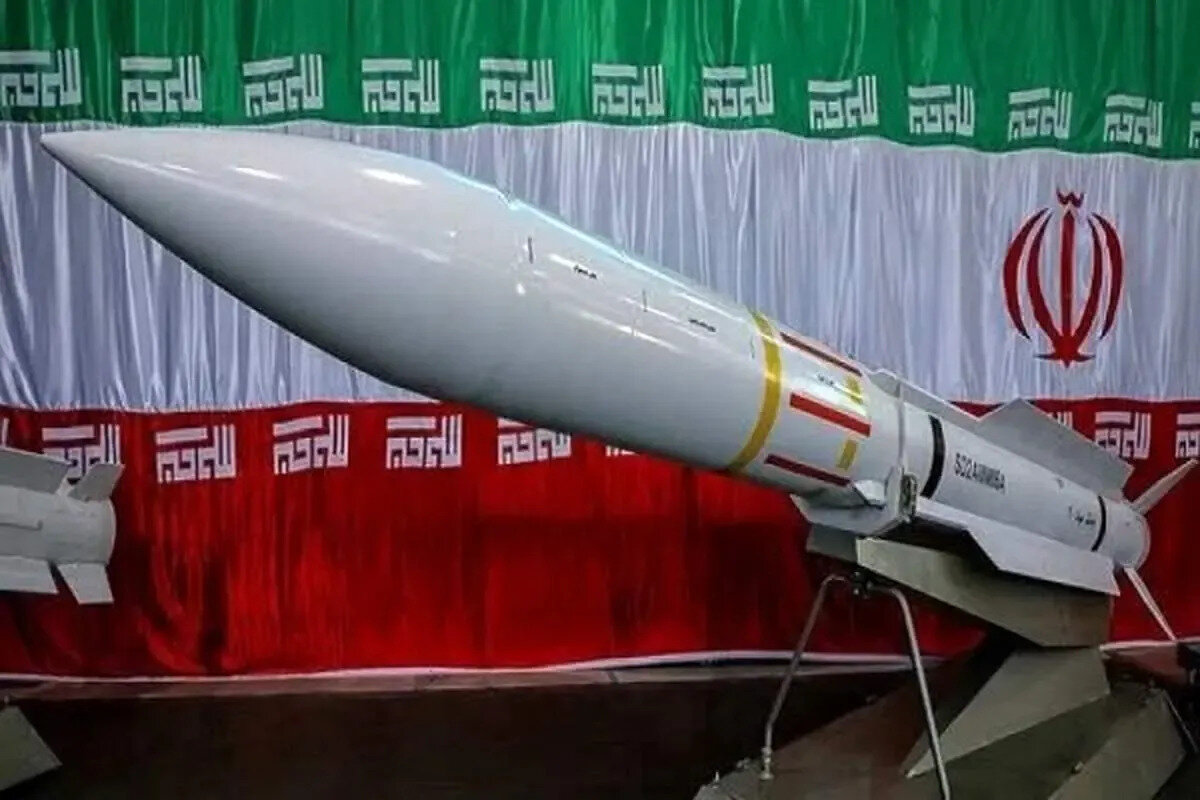
Second, American leaders dramatically underestimated Iran’s technological sophistication. Iran has world-class engineering and mathematics. It has built an indigenous defense industrial base, with advanced ballistic missiles, a homegrown drone industry, and indigenous orbital launch capability. Iran’s record of technological development, built up despite 40 years of escalating sanctions, is a stunning national achievement.
Third, military technology has shifted in a way that favors Iran. Iran’s ballistic missiles cost a small fraction of the U.S. interceptors deployed against them. Iranian drones cost $20,000; U.S. air-defense interceptor missiles cost $4m. Iran’s anti-ship missiles, with costs in the low six figures, threaten U.S. destroyers that cost $2-3bn. Iran’s anti-access and area-denial network around the Persian Gulf, layered air defense, drone and missile saturation capacity, and sea-denial capability in the strait have made the operational cost of imposing American will on Iran far higher than the United States can sustain.
Fourth, the U.S. policy process has become irrational. The Iran war was decided by a small circle of presidential loyalists at Mar-a-Lago, with no formal interagency process and a National Security Council that had been hollowed out across the preceding year. Trump’s director of the National Counterterrorism Center, Joe Kent, resigned on March 17 with a public letter describing “an echo chamber” used to deceive the president. The war was the output of a decision-making system in which the deliberative apparatus had been turned off.
This was neither a war of necessity, nor a war of choice. It was a war of whim. The underlying premise was hegemony. The United States was attempting to preserve a global dominance that it no longer possesses, and Israel was trying to establish a regional dominance that it will never have.
The likely endgame, given all this, is that the war will likely end with a return to something close to the status quo ante, except for three new facts on the ground. First, Iran will have operational control over the Strait of Hormuz. Second, Iran’s deterrent posture will be significantly raised. Third, the U.S. long-term military presence in the Persian Gulf will be significantly reduced. The other issues that supposedly prompted the U.S. to attack Iran — Iran’s nuclear program, regional “proxies”, the missile arsenal — will most likely be left where they were at the start of the war.
Even as the U.S. retreats, Iran will not press its advantage against its neighbors. Reasons explain why. Iran has a long-term strategic interest in cooperation with its Persian Gulf neighbors, not an ongoing war. And, Iran will have no interest in restarting a war it has just successfully ended.
Trump will no doubt try to depict the coming retreat as some great military and strategic victory. No such claims will be true. The truth is that Iran is far more sophisticated than the United States understood; the decision to go to war was irrational; and the underlying technology of war has shifted against the U.S. The American empire cannot win the war against Iran at an acceptable financial, military, and political cost. What America can regain, however, is some measure of rationality. It’s time for the U.S. to end its regime-change operations and return to international law and diplomacy.
Leave a Comment